

Our food supply seems solid – lots of supermarkets full of food all the time (nearly). It would be easy to imagine that we’ve never had it so good, and there’s nothing we need to do other than make trips to the supermarket, buy food there and eat it.
But many are already sensing things are not right. Food is getting more and more expensive – particularly healthy foods. Food price inflation in 2025 was 4.2%, and this year is expected to climb to 10% because of the attack on Iran. (That would double the price in 8 years.) In January 2025, one in seven UK households struggled to afford food, according to the Food Foundation’s food insecurity tracker.
On top of this, there are major threats that could upset our food supply very suddenly, and they are all already happening – wars, computer hacks and extreme climate events in places our food is grown. We import 84% of our fruit and 50% of our vegetables. All of it is grown in climate vulnerable zones.
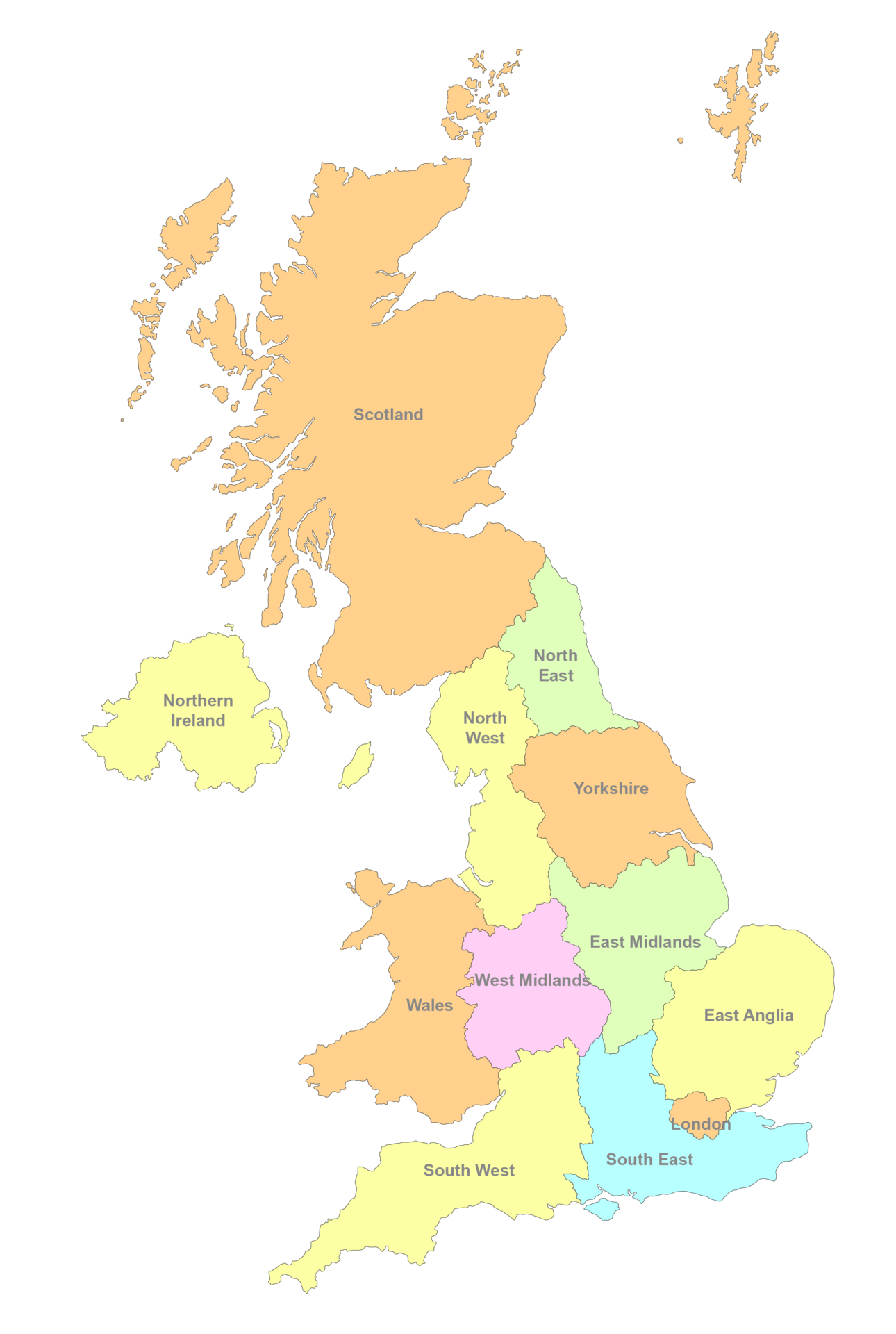
The UK produces 54% of the food it needs. France, Australia and US produce 100% of the food they need. For Spain it is 75%, for the Netherlands, 80%.
Our supermarket system is extremely centralised. 131 food distribution centres feed nine supermarkets that provide 94.5% of the food we eat. In an age of drone warfare and cyber warfare, this is an Achilles heel. The current system is also built for efficiency – the only food stored in UK is on lorries. In a major food shock, there is no slack. The shelves will just empty like they did during Covid.
Growing economic inequality is driving up asset prices, including land and housing. In 2023, non-farmers bought more than half of the farms and estates sold in the UK. This is blocking a new generation of farmers from growing food.
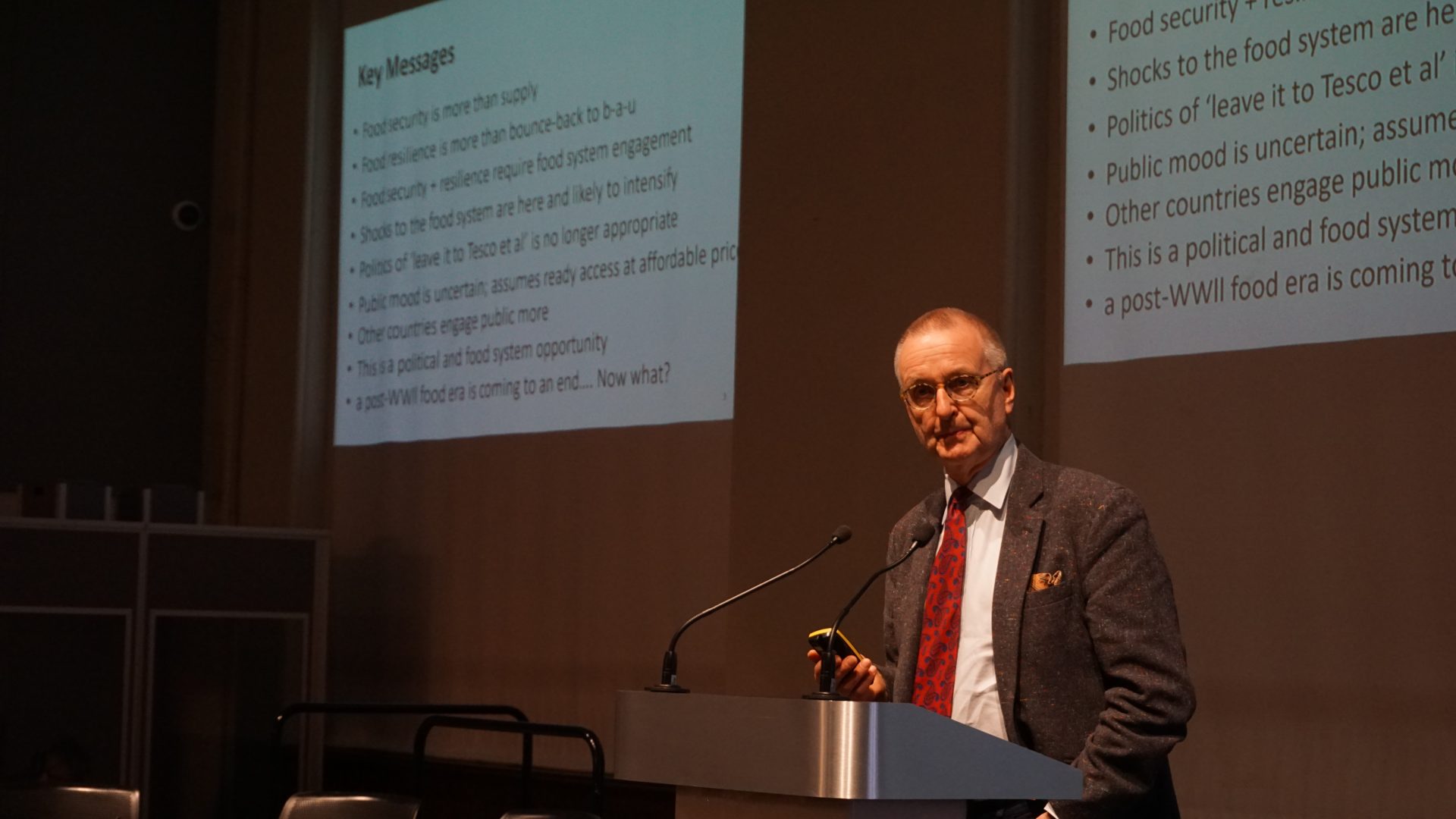
“Part of the policy problem facing the UK on food resilience is that government’s default position (‘leave it to Tesco et al’) sidesteps the issue that not even mighty retailers have the capacity to prevent climate heating or land flooding or mass zoonoses outbreaks or global conflicts affecting chokepoints in the event of major shocks.”
Professor Tim Lang, in Just in Case: narrowing the UK civil food resilience gap, 2025
Tim Lang makes three main calls to action.

Create a national food strategy or (better) a Food Security and Resilience Act.
Create a cross-sectoral committee or task force on food security and resilience.
Establish key governmental responsibilities.
Be inspired by Sweden's approach: Food Preparedness for a New Era (2024).

Support regions to expand local and regional food trade: planning powers and duties to use public land for local growing; statutory duty to use local food in schools.
Give new powers and duties to create food councils to oversee the development of local and regional food systems.
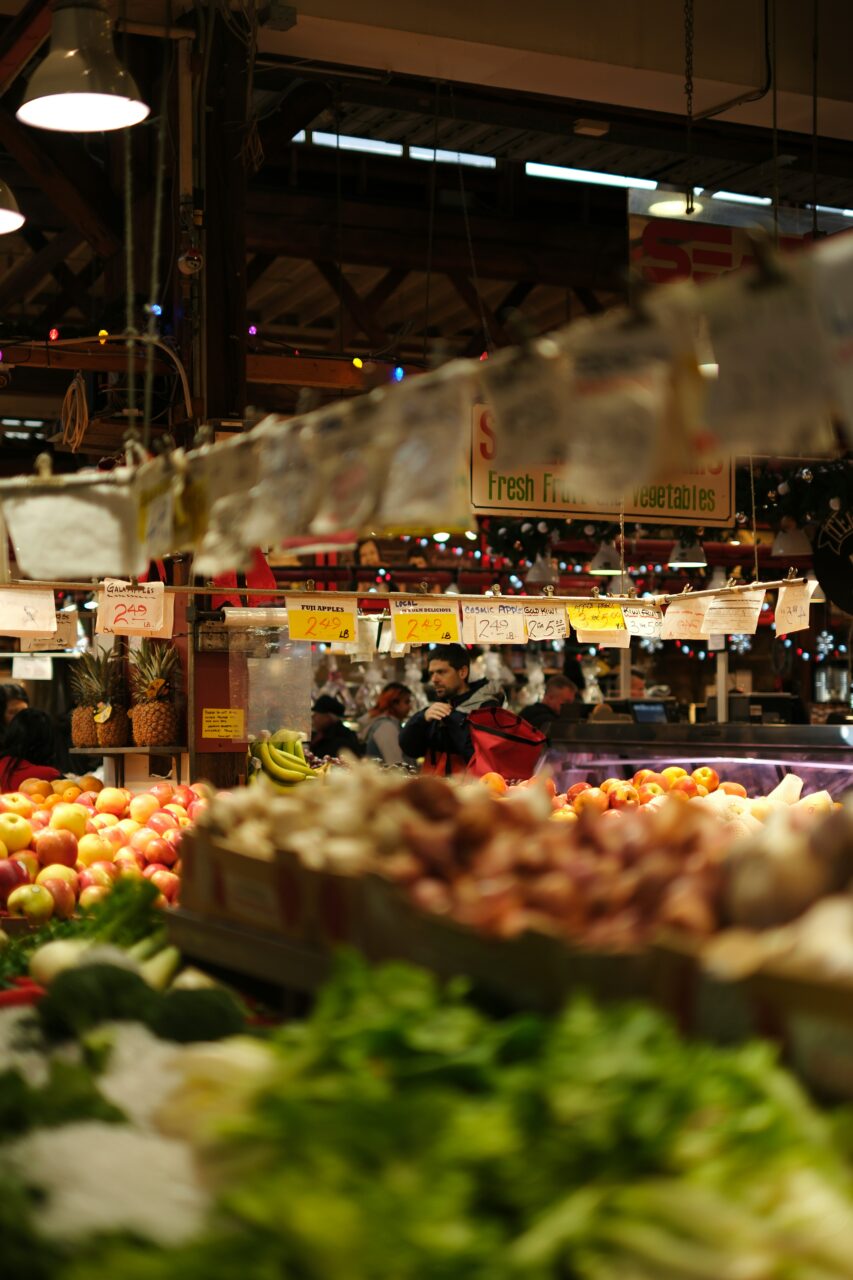
Support development of shorter higher value supply chains linking farmers to large and growing markets, local and regional.
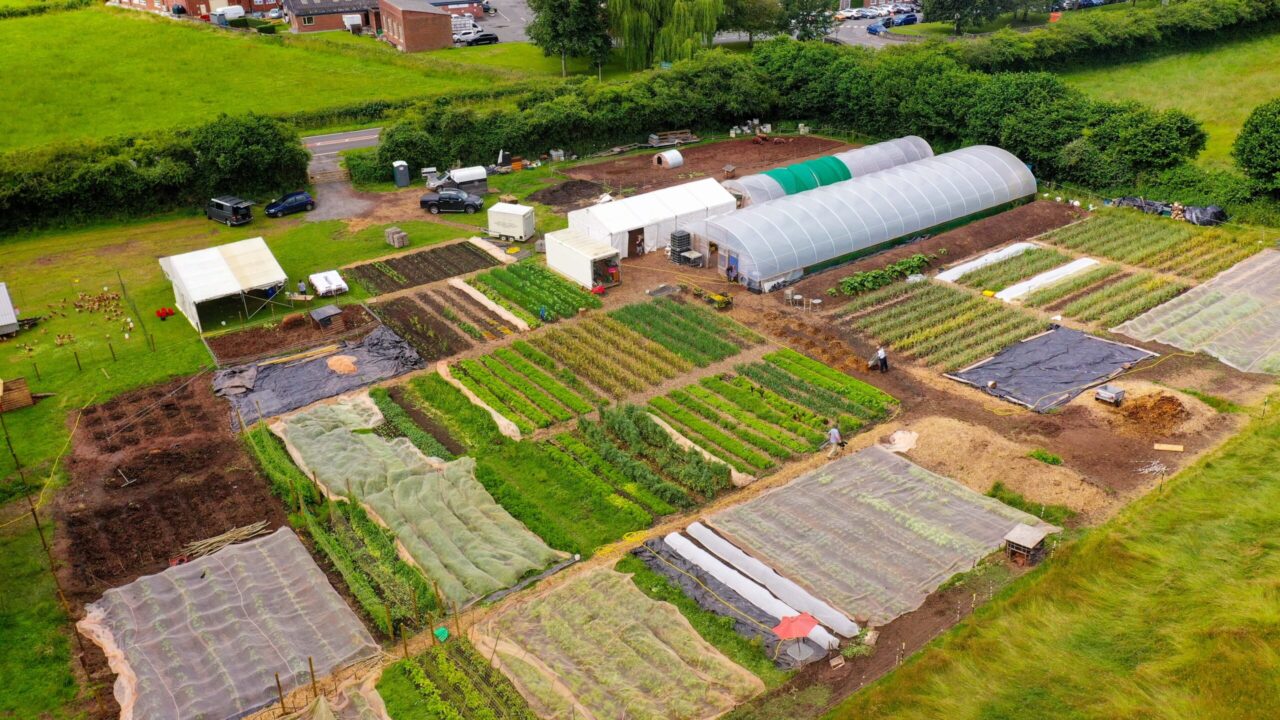
Develop new planning policies that protect land suitable for growing food for local and regional markets.
Enable building of homes for new farms supplying regional and local markets.
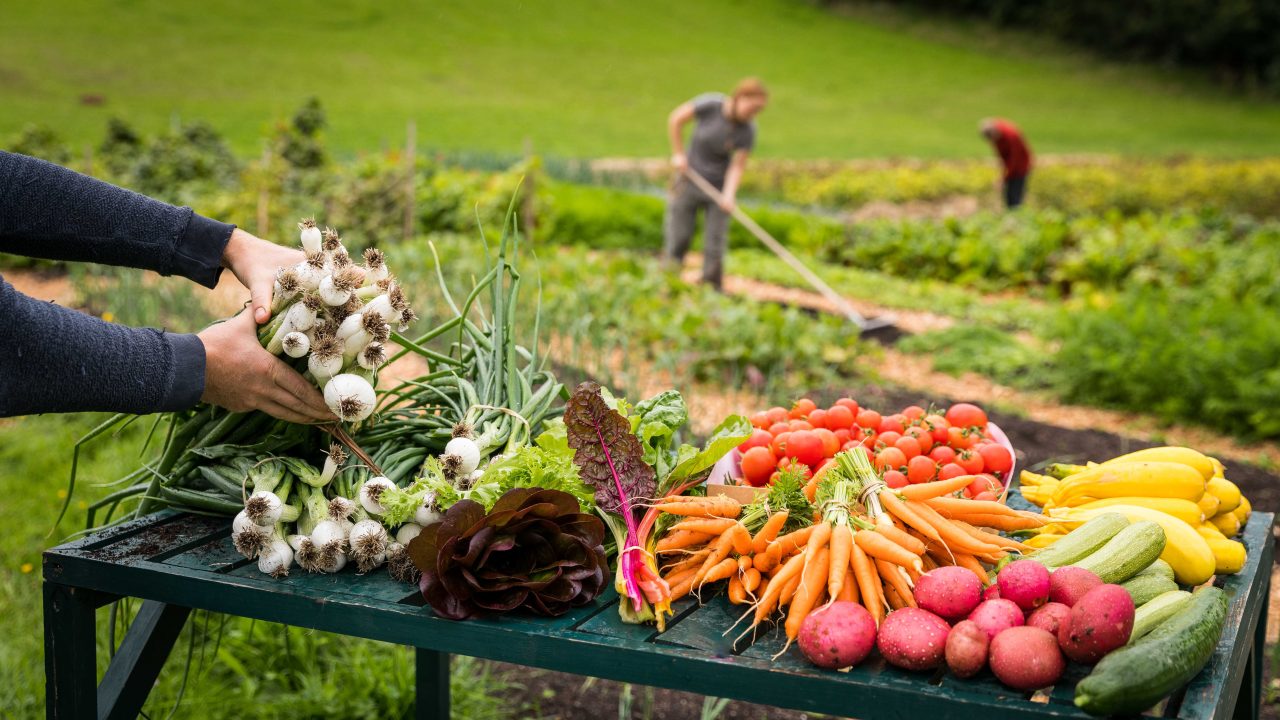
Expand local and regional horticulture to overcome high dependence on imports and from regions particularly vulnerable to climate overheating.
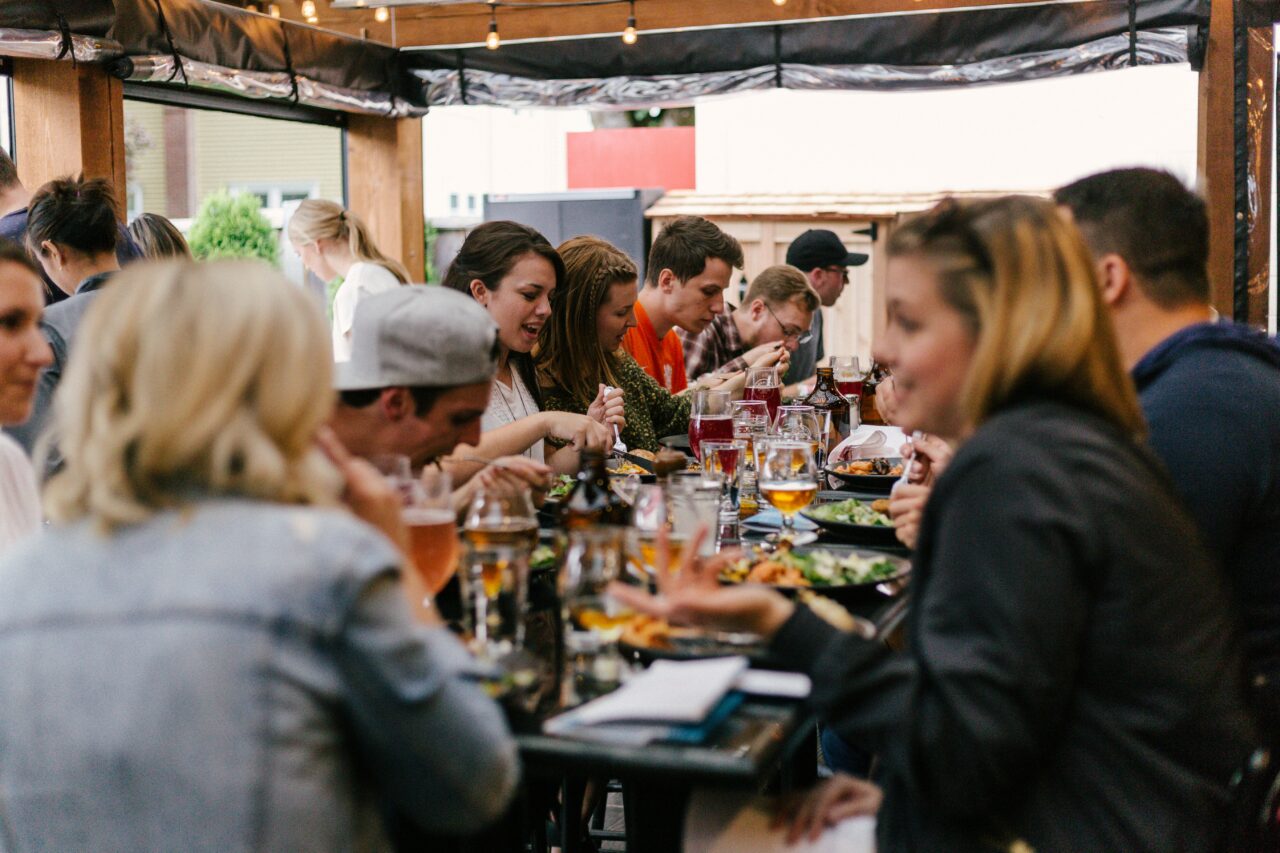
Establish a Right to Grow in legislation to enable communities to access land for growing.
Support community projects to grow food non-commercially and to teach adults and children how to grow food.
Provide guidelines on mass catering, drawing on the expertise of festival food providers, the hospitality sector and charities with experience of distribution within UK and in international disaster zones.

Provide food resilience guidelines for town and community Councils.
Engage civil society organisations to improve emergency food advice.
Create new food emergencies website and printed materials for every household, as in other countries.
Develop a system of public messaging: multicultural messages, trustworthy communicators, effective channels.

Overhaul Community Risk Registers to include food, which are understood and of value to every household.
Establish regional food resilience committees, coterminous with local resilience forums (England and Wales), regional resilience partnerships (Scotland) and emergency preparedness groups (Northern Ireland).
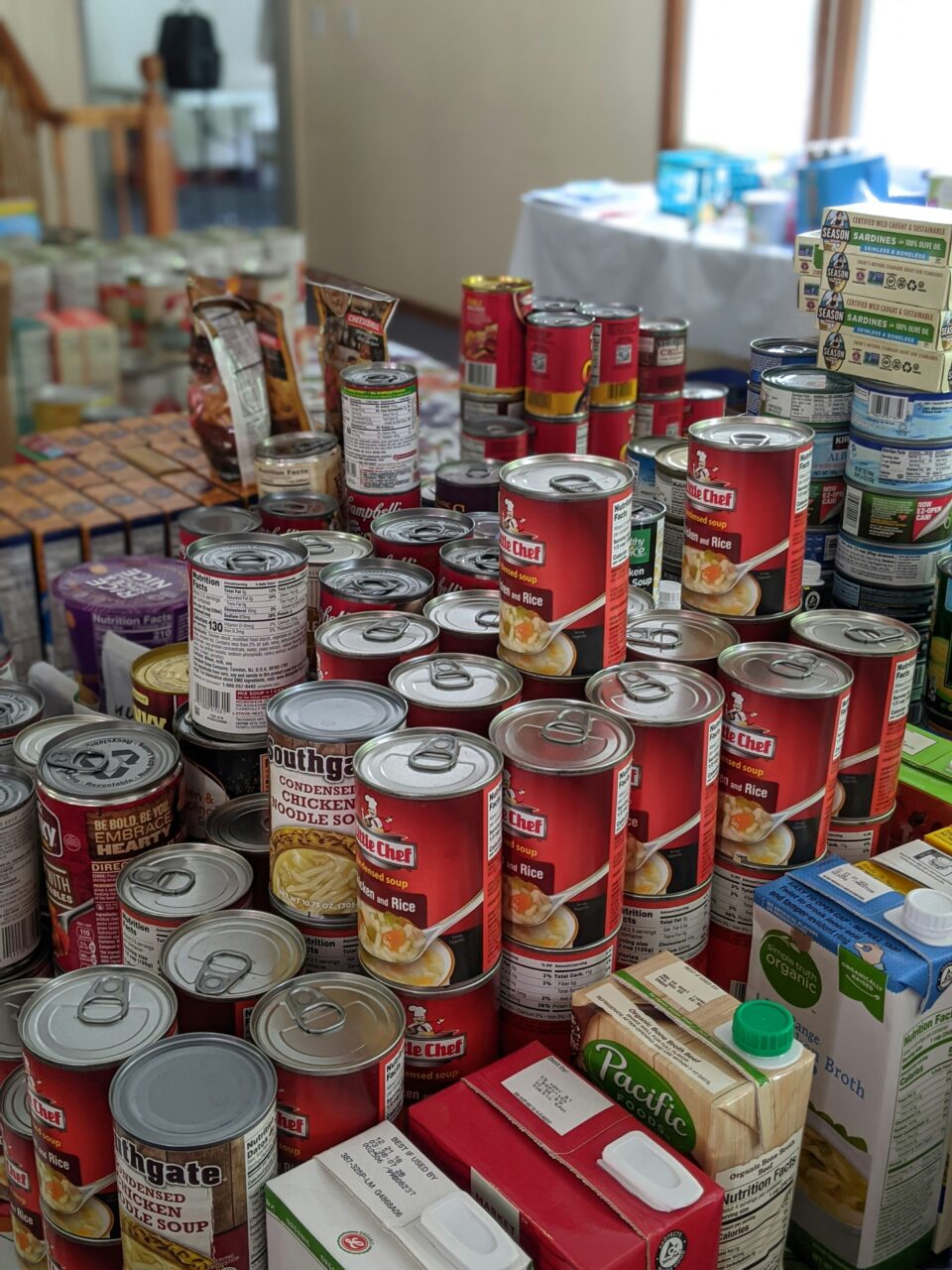
Implement stockpiling and plans for rationing.
Determine which foods we need, taking into account nutrition, culture, socio-economic differences, and morale.
Decide where to store these foods – on a national, regional, community, household scale.
Learn from other countries listed below.
There is good news. Governments across the world are taking action. There is a vast resource of experience to take inspiration from.
Action doesn't just improve food security. It helps farmers and rural areas.
> It supports new enterprises on farms and a new generation of farmers.
> It supports rural food economies through new market opportunities and higher value local trading.
> It repopulates rural areas.
> It creates new demand for agroecologically grown produce, regenerating biodiversity, building our soils and keeping our rivers clean.
The Emergency Management Framework for Agriculture is currently being upgraded to include the entire food system.
The Food Policy for Canada aims to ensure all Canadians have access to a sufficient amount of safe, nutritious and culturally diverse food. One priority outcome is improving communities’ capacity to deal with food-related challenges.
Canada also has established a Get Prepared website, with measures to keep safe for 72 hours. It includes one food measure in its list of emergency kit items: “Food that won’t spoil, such as canned food, energy bars and dried foods (replace food and water once a year)”.
The 2014 law on the Future of Agriculture, Food and Forestry has legitimised and energised hundreds of local/regional projects that are building closer urban-rural ties.
Following Covid – where it was observed that areas with local food projects fared better than those without – a recovery programme, France Relance, included help to build local supply chains. This has energised many more local and regional projects.
The National Strategy for Food, Nutrition and Climate was set in law in 2021. This addresses climate, human health and nutrition, biodiversity, resilient farming and local food systems and guaranteeing food sovereignty.
A national prepare-for-disasters website and brochure (also provided in English) offer detailed and science-based advice on how to build a 10-day stockpile.
This advice to citizens is matched by government measures to ensure short-term food supply in times of crisis. There is a state food reserve for emergencies, storing rice, pulses, condensed milk and grains. The reserve is designed to last between a few days and a few weeks.
A new national Food and Nutrition Strategy was launched in 2024, supporting regional supply chains and circular economies, as well as efficient and sustainable use of resources.
In response to the immediate threat from Russia, Latvia has a comprehensive total defence system involving the whole of society.
A ‘72 hours’ public information campaign sets out what Latvian people need to be able to survive for the first 72 hours of a major crisis.
A website sets out what citizens should do, including food and drink measures.
Latvia also has a programme of public education for schools and a 70-minute video.
The Latvian government continually assesses the state of their food system, including existing stockpiling.
The government provides a diverse public education campaign on planning ahead for emergencies, including guidelines on food preparedness.
It sets out advice for the first 72 hours in the case of evacuation and two weeks if confined to home.
It advises stockpiling favourite items, gathering the necessary equipment (e.g. can openers) and storing 12 litres of water per person for three days, preferably in small bottles.
Lithuania also has a national food stockpile.
The government provides advice for emergencies, including food and drink, and advises putting together an emergency kit to survive the first 48 hours after a disaster.
Sweden has had a total defence plan since World War II, with collective responsibility across the whole of society – national government, municipalities and counties, and citizens. This includes national food guidelines.
The Government of Sweden commissioned a thorough analysis of food security, resulting in the report, Food Preparedness for a New Era (2024). (Google translation here.)
A brochure, ‘If Crisis or War Comes’, provides information on food preparedness, including what food to store, how to store it and how to cook it.
In a crisis, Sweden aims to ensure access to safe food for its population for about three months.
The Swedish Food Agency maps and analyses the food system regularly.
Self-reliance and stockpiling have a long history in Switzerland. It is landlocked and dependent on imports for nearly half its food.
Stockpiles are compulsory for local authorities by law to last between two and four months, with a current plan to expand this to 12 months.
Switzerland provides advice – which includes having a stockpile of food and drink to last a week – to its citizens. Supermarkets, Coop and Migros, have also produced guidelines.
The government assesses risks to the food supply on an annual basis.

